Police Interview: What Happens, Step by Step
 Save
A police interview is a formal, recorded conversation in which an officer asks you about an offence they suspect you committed or witnessed. It happens either under caution at a police station or, less often, voluntarily elsewhere. HS Criminal Law sets out what actually happens from the moment you arrive to the decision that follows, so the process feels less like a black box.
Before the interview starts
If you have been arrested, you will usually be held in a custody suite while the custody officer records your details and confirms the grounds for your arrest. You have the right to free legal advice at this stage, and asking for a defence solicitor does not make you look guilty. It simply means someone independent is checking that the process is followed properly.
The custody officer will also ask about your welfare: whether you need medical attention, an interpreter, or an appropriate adult if you are under 18 or vulnerable. None of this happens quickly, and waiting for a solicitor to arrive can take time, particularly outside normal working hours.
The caution and what it means
Before any formal questioning, the officer will read you the caution. It tells you that you do not have to say anything, but that anything you do say may be used as evidence, and that staying silent in some circumstances can count against you later. This is the same caution described in detail on our page about what no comment means in a police interview, and understanding it properly matters more than most people expect.
The caution is not a trick or a formality to get through. It is the clearest signal you will get that what happens next is evidential, not casual, and that how you respond is a genuine decision with consequences.
What "adverse inference" means in practice
If you stay silent on a point the prosecution later relies on, a court or jury may be allowed to draw an adverse inference from that silence, meaning they can treat it as potentially weighing against you. This is why many solicitors discuss, case by case, whether staying silent or giving a prepared statement is the better approach before the interview begins.
Who is in the room
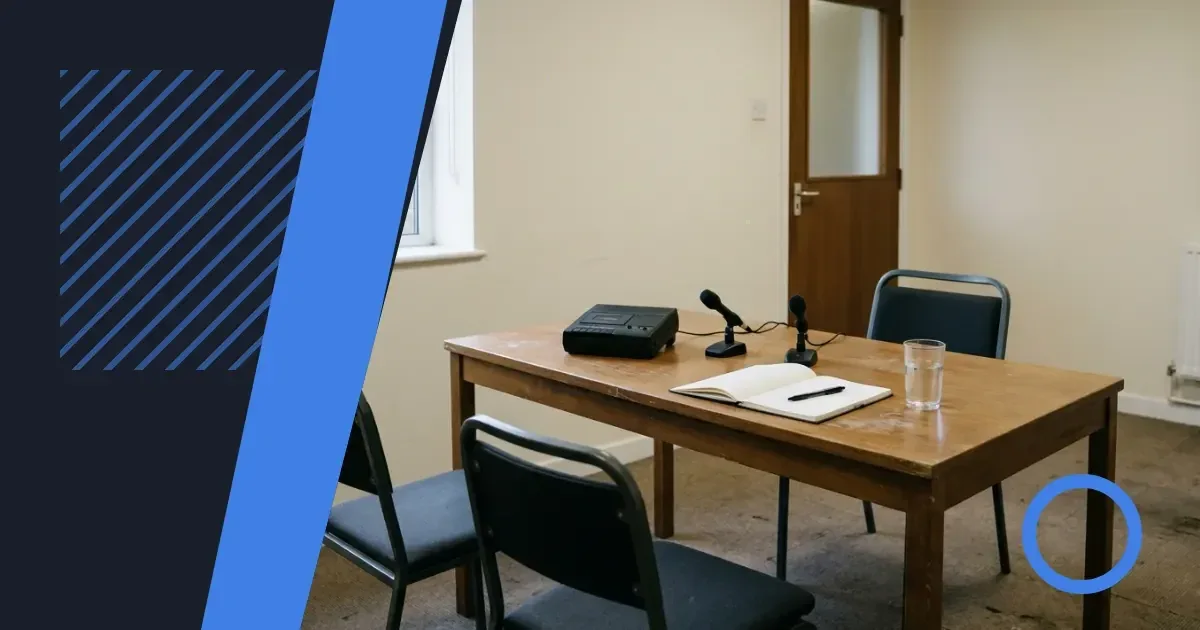
A typical interview involves two officers, you, and your solicitor if you have asked for one. An appropriate adult joins if you are a child or an adult with additional needs that affect your ability to understand the process. Interviews are recorded, usually on audio or video, and that recording becomes part of the case file.
- The interviewing officer, who asks the questions
- A second officer, who monitors and takes notes
- Your solicitor, who can intervene, advise you to pause, or object to unfair questions
- An appropriate adult, where one is required
How the questioning runs
The officer will open by confirming the date, time, and who is present, then explain why you have been arrested or asked to attend. Questions tend to move from general background to the specific allegation, and officers are trained to probe inconsistencies rather than accept a first answer at face value.
You can ask for a break at any point, and your solicitor can ask for one too if they want to advise you privately. The interview is not a single uninterrupted block; pausing to consult is normal and does not need to be justified.
Prepared statements
In some cases, your solicitor may suggest reading a prepared statement rather than answering questions directly. A prepared statement sets out your position in writing, which is then read aloud and recorded, after which you may still choose to answer no further questions. It lets you put your account on record without opening yourself up to extended questioning on every detail.
What the police must disclose beforehand
Ahead of the interview, the officer should give your solicitor enough information about the allegation for you to understand, in general terms, what you are being asked about. This is often called pre-interview disclosure, and the amount given varies by case; officers are not required to hand over every piece of evidence at this stage.
| Stage | What usually happens | Your role |
|---|---|---|
| Before interview | Solicitor receives a brief account of the allegation | Listen, ask questions privately |
| During interview | Officers ask about the specific allegation | Answer, stay silent, or read a statement |
| After interview | Officer reviews the recording and evidence | Wait for a decision or further contact |
What happens after the interview
Once questioning ends, you will usually be released while the officer considers the evidence, which might mean release under investigation or release on bail with conditions attached. Our page on how bail works in criminal cases explains what those conditions can involve and how long they might run for in principle.
From there, the case may be dropped, you may be charged, or you may receive a caution instead of being charged, depending on the strength of the evidence and the public interest in prosecuting. If you are charged, the next step is usually a first hearing at a magistrates' court.
Steps to take if you are called for interview
- Ask for a solicitor before answering any substantive questions.
- Write down what you remember about the incident as soon as possible, for your own reference.
- Ask the custody officer or solicitor what you are being investigated for, in general terms.
- Discuss with your solicitor whether to answer questions, stay silent, or give a prepared statement.
- Keep any paperwork you are given, including bail conditions or a release notice.
- Follow up with your solicitor about next steps rather than waiting passively.
Common misunderstandings about police interviews
Many people assume that asking for a solicitor delays things unfairly or signals guilt to the officers. In reality, it is a basic protection, set out under the rules covered on our page about your rights when arrested, and officers expect it to be used.
Another common assumption is that an interview under caution at a police station is the only kind that matters. A voluntary interview, where you attend without being arrested, carries the same caution and the same legal weight, even though the setting feels more informal.
#Defence solicitor #Bail #PACE
Download PDF: Getting ready for a police interview PDF, 28 KB
Further reading
Frequently asked questions
Do you have to answer questions in a police interview?
No, you have the right to stay silent, though a court may later be allowed to draw an adverse inference from silence on points the prosecution relies on. A solicitor can advise on which approach fits your situation.
What should you expect during a police station procedure before the interview itself?
You will go through booking in with a custody officer, who records your details, checks your welfare, and confirms your right to legal advice. This can take some time, especially while waiting for a solicitor to arrive.
What happens if you are interviewed without being arrested first?
A voluntary interview still happens under caution and carries the same legal significance as one following an arrest. You still have the right to free legal advice and to have a solicitor present.